HGK-GNN: Heterogeneous Graph Kernel based Graph Neural Networks
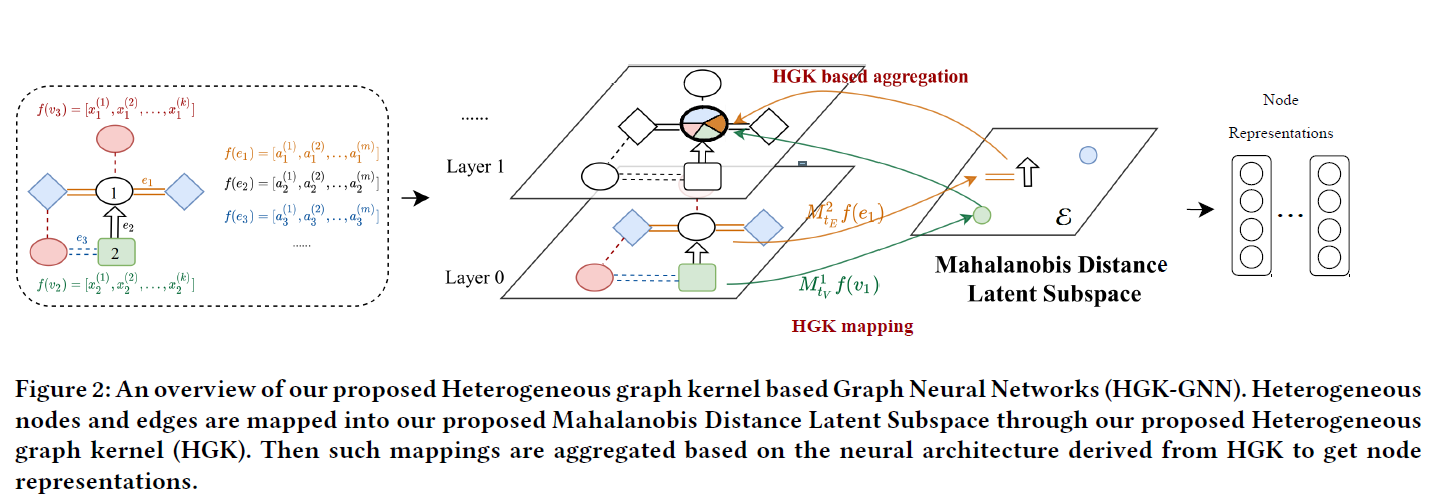
Motivation 现有模型不好解决异构图 现有异构图方法缺少理论分析 Intro写作思路: 先介绍GNN以及GNN对应的理论研究,从而过渡到现有GNN模型不能解决异构图问题。(对应背景和现在的工作进度) 接下来介绍现有异构图的问题 现有异构图需要人工指定metapath,或者其他需要经验得到的东西。 缺少针对HGNN理论分析。 引出本文的核心:Graph Kernel(为什么这里不放在开头呢?因为这个东西是用来解决问题的方法,而不是问题核心。问题还是GNN,所以第一段讲的是GNN) Graph Kernel(GK):用于评价图上两个点或者两个子结构之间相似度的东西。(一种算子) GK在同构图上的应用,但是在异构图上应用仍然存在挑战(存在什么挑战?这里讲一下是不是好一点。) 本文的工作 Contribution 提出了一个基于异构图的Graph Kernel。第一个将马氏距离(Mahalanobis distance,MD)和异构图kernel相结合,来捕获异构信息。 通过理论把graph kernel和传统的HGNN联系起来,对...

如何写好一个Introduction
之前一直没有对写作intro的总结,现在根据AAAI写作时和老师的讨论,进行一下总结。 intro的核心目的:讲好一个故事,让reviewer知道,你要做的是什么?为什么要这么做?难点在哪? A类文章的关键: 问题要难!(问题不容易解决) 方法要新!(之前可以是没人考虑这个点) 因此在进行Intro写作时,可以遵循如下思路 问题描述:第一段主要是问题描述(problem setting)。本段主要是针对要研究的问题进行简要介绍,方便读者直接了解你要做的问题是什么,给不熟悉这个领域的人一个大致的介绍 进行问题的描述,可以分为以下几个方向描述: 关于problem setting,这个问题是啥? 他的背景如何,意义在哪?(实际生活的应用) 可能会有一点挑战? 现在的研究方案的总结你的这个问题是你自己提出来的吗? 如果不是,可以遵循以下的思路进行写作? 现在的研究可以分为什么类别? 做到了什么地步?他们是如何解决这个问题的? 他们的发展过程是什么样的?比如PB->PF的演变 为什么他们要这么做? 如果这个问题是你全新提出来的,可以遵循以下思路 与之类似领域的任务别人...

Breaking the Limits of Message Passing Graph Neural Networks
Motivation Existing GNNs’ expressive power is limited to 1-WL test, thus they cannot count some substructures likes: triangle, tailed triangle, and 4-cycle graphlets Existing beyond 1-WL test GNNs is computational heavily $O(n^3)$ and memory hungry $O(n^2)$. Some methods introduce some handcrafted features that cannot be extracted by GNN into the node attributes to increase the GNN’s expressive power: Distance encoding, identity GNN, and some Jure’s works. Existing GNN focuses on the lo...


Heterogeneous Graph Structure Learning for Graph Neural Networks
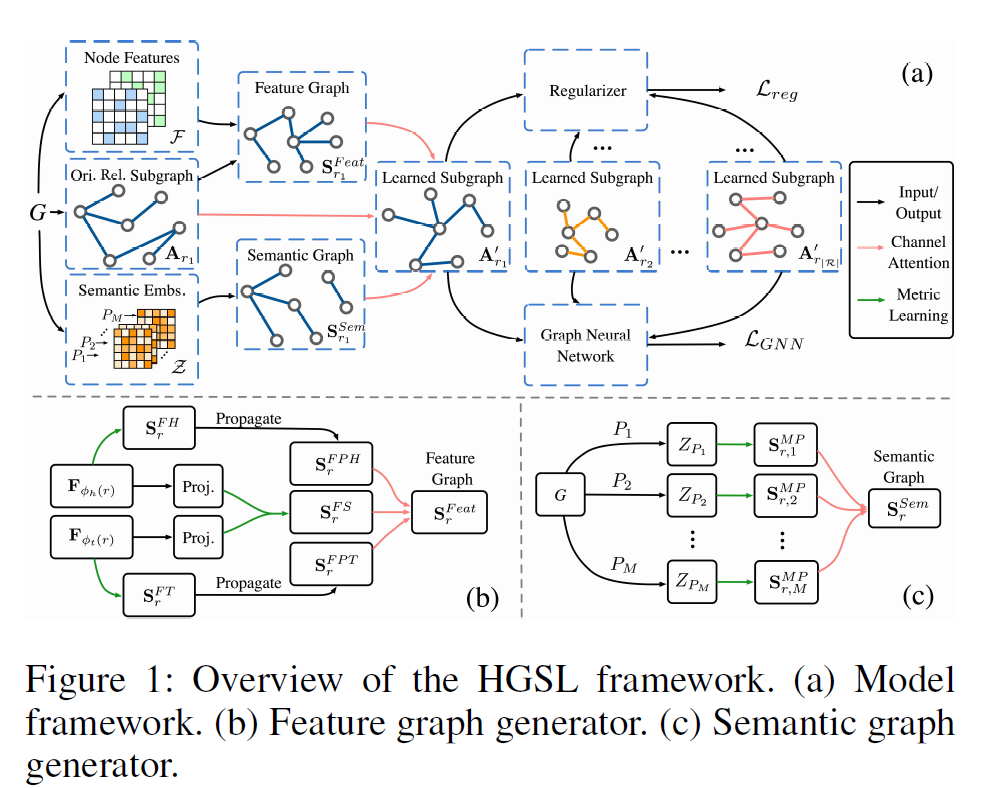
Motivation:现有的异构图学习中一些图的结构是不好的,不利于下游任务,比如在user-item的异构图中,用户可能会点击一些无用的item,从而给异构图表示学习带来一些噪声。 现有有的一些图结构表示学习的方法,通过把邻接矩阵参数化,学习更好的邻接矩阵用于下游任务。但是他们都是用于同构图的方法。 本文提出了GSL框架,通过考虑三种不同的图结构:特征相似图,特征传播图,和语义图来学习更好的图结构用于下游任务。 Approach: 特征相似图:通过在节点之间的特征上用度量学习的方法,学习节点之间的相似度,构成相似度矩阵。 特征传播图:特征转播图通过特征与拓扑之间的交互来生成图结构,特征之间的相似度是可以传播的。我们通过一个例子来更好的理解。例如,考虑生成用户和电影之间的潜在图结构,存在这样一种图结构生成方式:如果用户U1 看过电影M1,且M1和M2相似,那么用户U1可能对M2感兴趣即和节点存在潜在边。上述潜在的图结构可以分两步构建:得到特征相似的节点对(找到相似的电影M1和M2),随后用拓扑结构传播(通过U1的观影历史得到可能感兴趣的电影M2)。HGSL 也通过上述两步过程...

How to crack a soga backend
How to crack a soga backendSoga 后端破解思路小分享。 仅以此文记录和分享一些关于go应用破解的过程。由于本人也是第一次进行go程序的逆向,本文的分析会比较简单和基础。 Sogasoga 后端是一个同时支持 v2ray、Trojan、Shadowsocks 的后端,社区版最高支持88用户,优化了长时间运行的内存占用。 本文以破解2.0.6为例,在release处可以下载指定版本的soga后端。 符号还原Go二进制文件由于由于其自身恶心的机制导致对其直接在IDA中逆向十分困难。 Go 语言的编译工具链会全静态链接构建二进制文件,把标准库函数和第三方 package 全部做了静态编译,再加上 Go 二进制文件中还打包进去了 runtime 和 GC(Garbage Collection,垃圾回收) 模块代码,所以即使做了 strip 处理( go build -ldflags "-s -w" ),生成的二进制文件体积仍然很大。在反汇编工具中打开 Go 语言二进制文件,可以看到里面包含动辄几千个函数。再加上 Go 语言的独特的函数调用...
Beyond Clicks Modeling Multi-Relational Item Graph for Session-Based Target Behavior Prediction
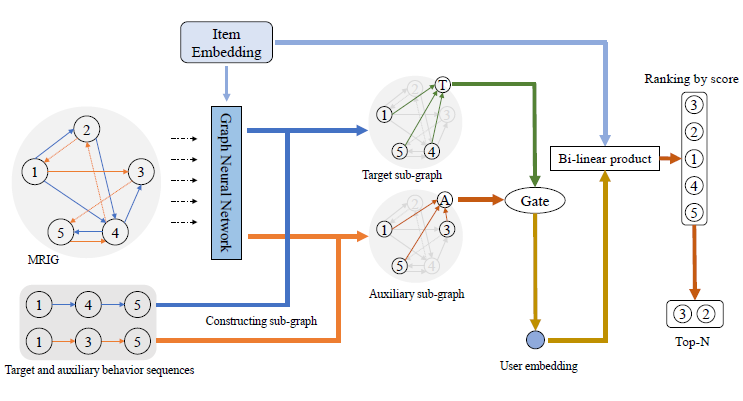
BackgroundSession recommendation: Aiming to predict the next item to be interacted with a user under a specific type of behavior, and modeling user dynamic interest. Target behavior session recommendation: Considers target behavior and auxiliary behavior sequences and explores for accurate prediction. Challenges Firstly, most existing methods focus on only using the same type of user behavior as input for the next item prediction, but ignore the potential of leveraging other type of beha...
GHashing Semantic Graph Hashing for Approximate Similarity Search in Graph Databases
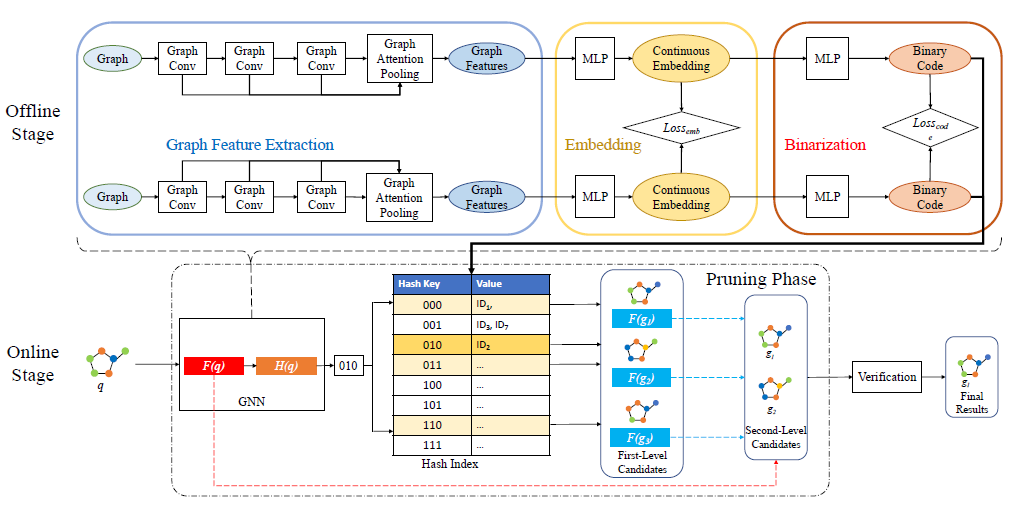
Objection: Retrieve graphs from the database similar enough to a query. Optimize the pruning stage. Background: Graph Edit Distance (GED) is a method to measure the distance between two graphs. The current similarity search, first compute the lower bound between the query and the every candidate graph and they prune the graph larger tan than the threshold. Then, they compute the exact GED in the remaining graphs. Challenges: The computation of Graph Edit Distance (GED) is NP-hard. Exis...
最新文章